
Simone Weil „Leçons de philosophie“ (Lectures on Philosophy)
Now, as for illusion, the question arises whether there is a difference in degree or in nature between a dream and an illusion. One can always state this: the transition from dreaming to waking does not bring us the sensations that already exist in the dream; and, after waking, illusions continue (for example, one embroiders the workings of the alarm clock instead of embroidering a phantom). One can say that a dream is an illusion extended to the whole of perception; a dream is not a hallucination (unreal sensations) but an illusion (imagination added to sensations). Therefore, all sensations are genuinely felt, and imagination never transforms into sensations. (Transcription of her classes at the girls’ secondary school in Roanne from the years 1933–1934 (edited and transcribed by her former student Anne Reynaud-Guérithault))
The French word “illusion” in this text refers epistemologically to the concrete misinterpretation of sensory data – that is, the fact that the eyes or ears perceive something real, but the brain derives something incorrect from it. “Täuschung” (deception/delusion) is an unusual but apt translation of “illusion” into German.
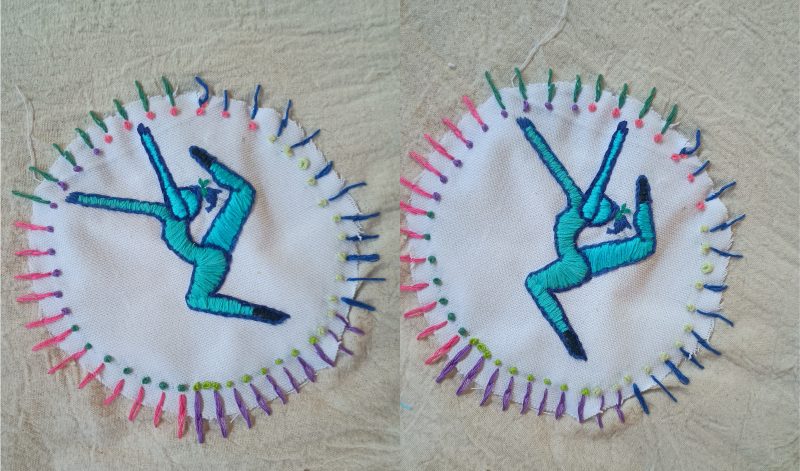
The French verb “broder” used by Simone Weil connects two levels. On a craft level, it means to embroider. Weil uses this image to illustrate the process of perception: the imagination does not merely passively absorb real sensory data, such as the real ticking of an alarm clock, but embroiders and overlays it with a dream image. The imagination works like an embroiderer. It takes the “naked fabric” (the real, physical ticking of the alarm clock) and embroiders a dream image around it with the threads of fantasy.
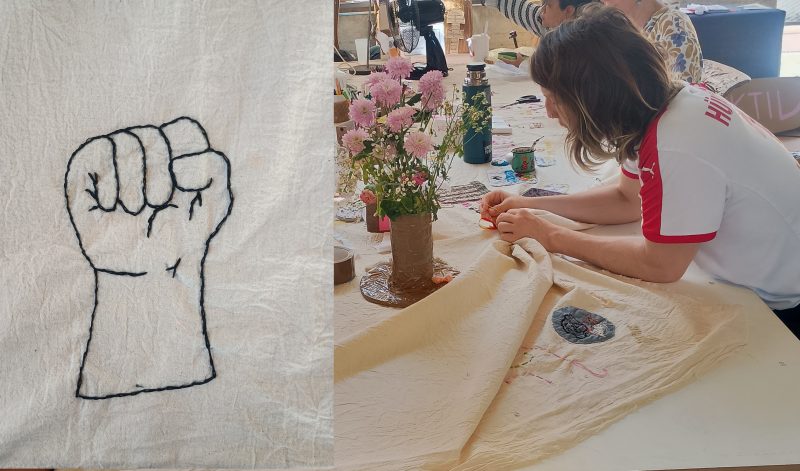
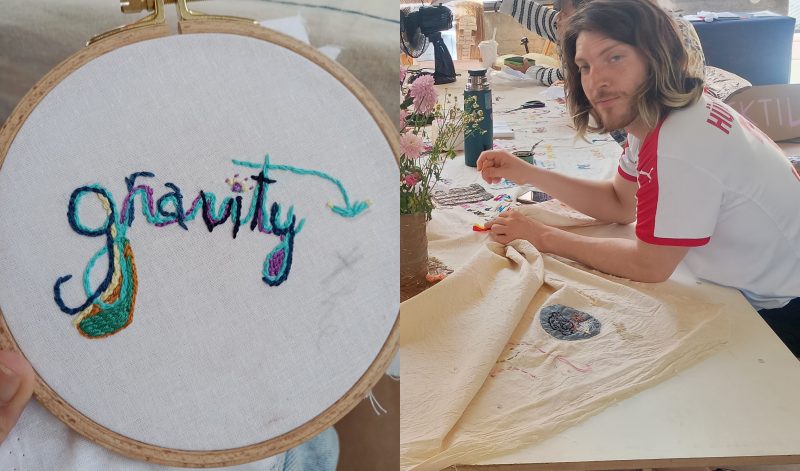
At the same time, in French usage, “broder” means to embellish a story with invented details, anecdotes or circumstances to make it more lively. In Weil’s text, both meanings intertwine: the real is transformed by what is embroidered, not simply supplemented.
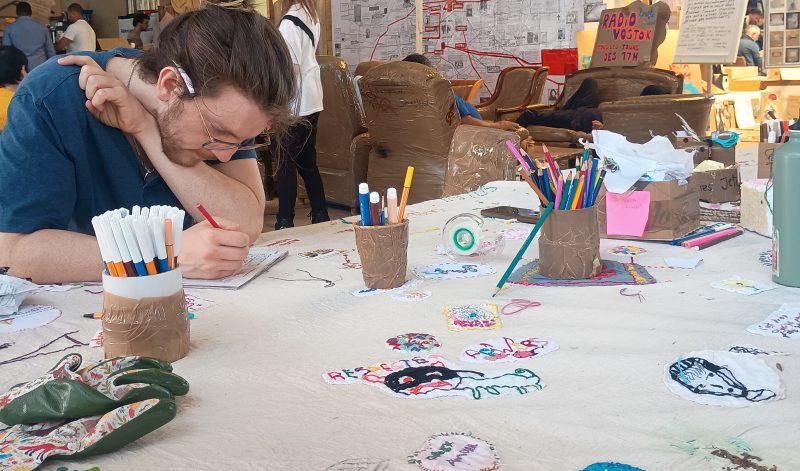
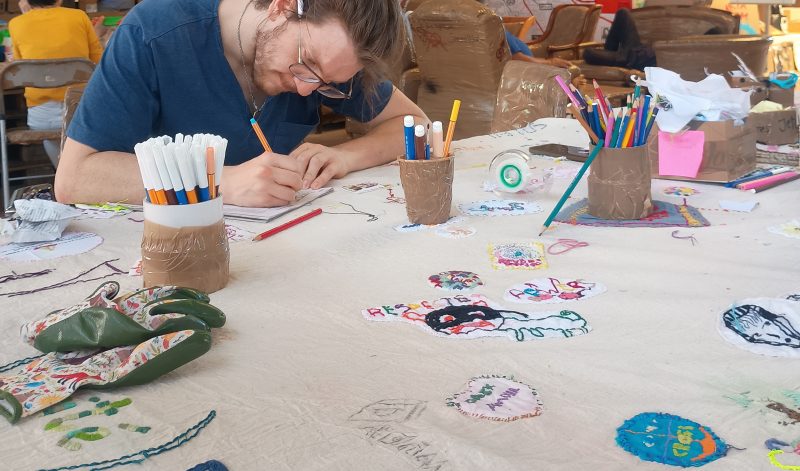
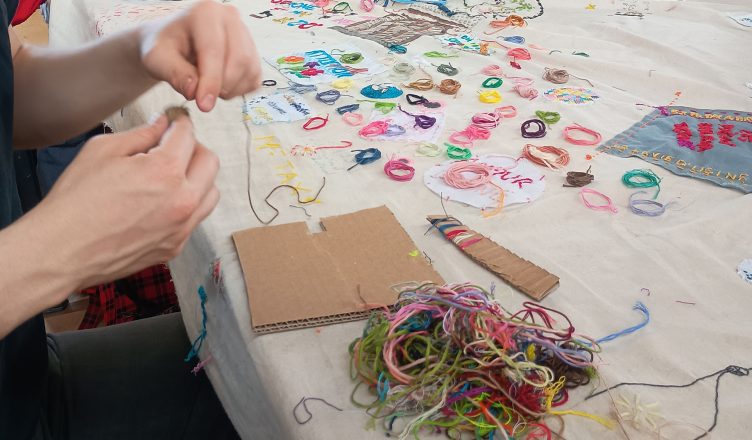
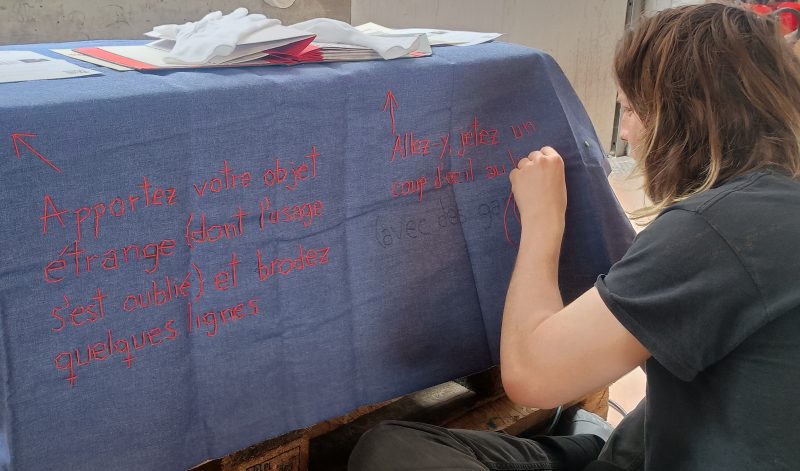
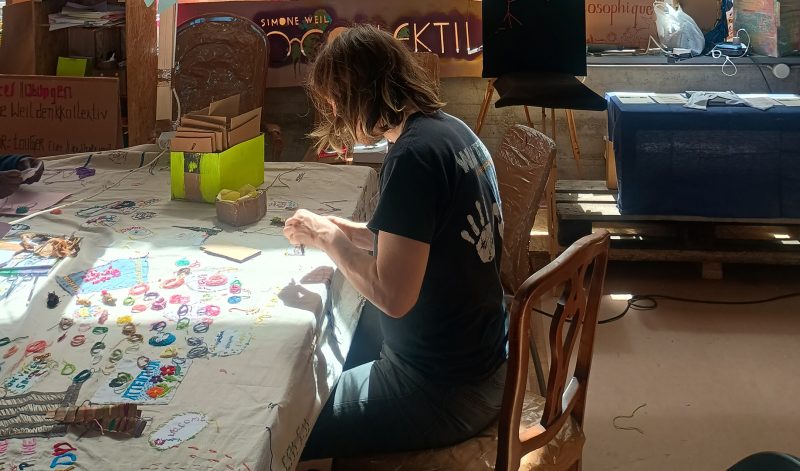
The eleven-week embroidery project in the Simone Weil Pavilion was therefore not just a textile craft, but a literal “spinning together and embellishing of thoughts” – entirely in line with Simone Weil’s ambiguous choice of words.
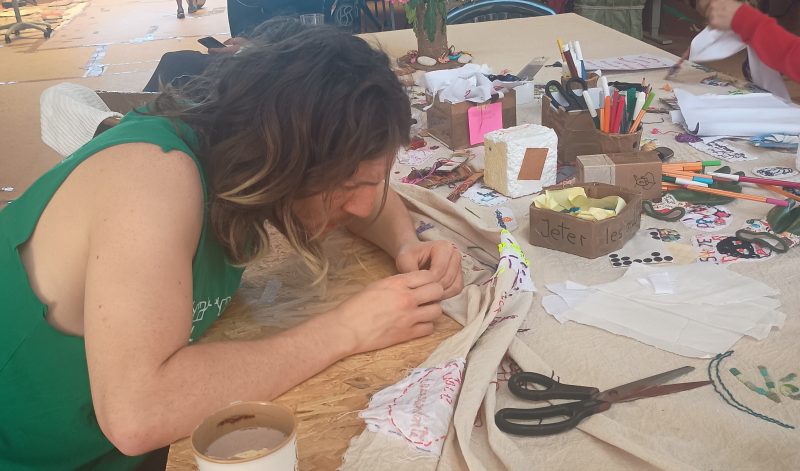
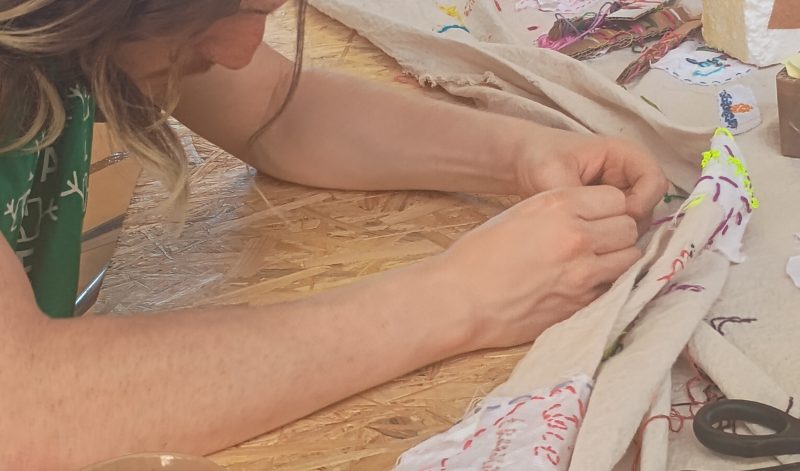
Embroidery by and with Juan Cruz Paz